Designing a specialised AI for pay planning & compensation

Designing a specialised AI for pay planning & compensation

Designing a specialised AI for pay planning & compensation

AI-assisted compensation governance workflows for manager appraisal decision-making

AI-assisted compensation governance workflows for manager appraisal decision-making

AI-assisted compensation governance workflows for manager appraisal decision-making

Industry

Industry

HRTech

HRTech

Timeline

Timeline

5 weeks

5 weeks

What Projects did I work on?

What Projects did I work on?

What Projects did I work on?

Compiq is an end-to-end compensation and pay planning platform that enables organizations to manage compensation planning, budgeting, and pay decisions. While I contributed across the product experience, this project focuses on a specific workflow that highlights my design process, decisions, and user-centered thinking.

Context

Context

Context

The office

View from the office

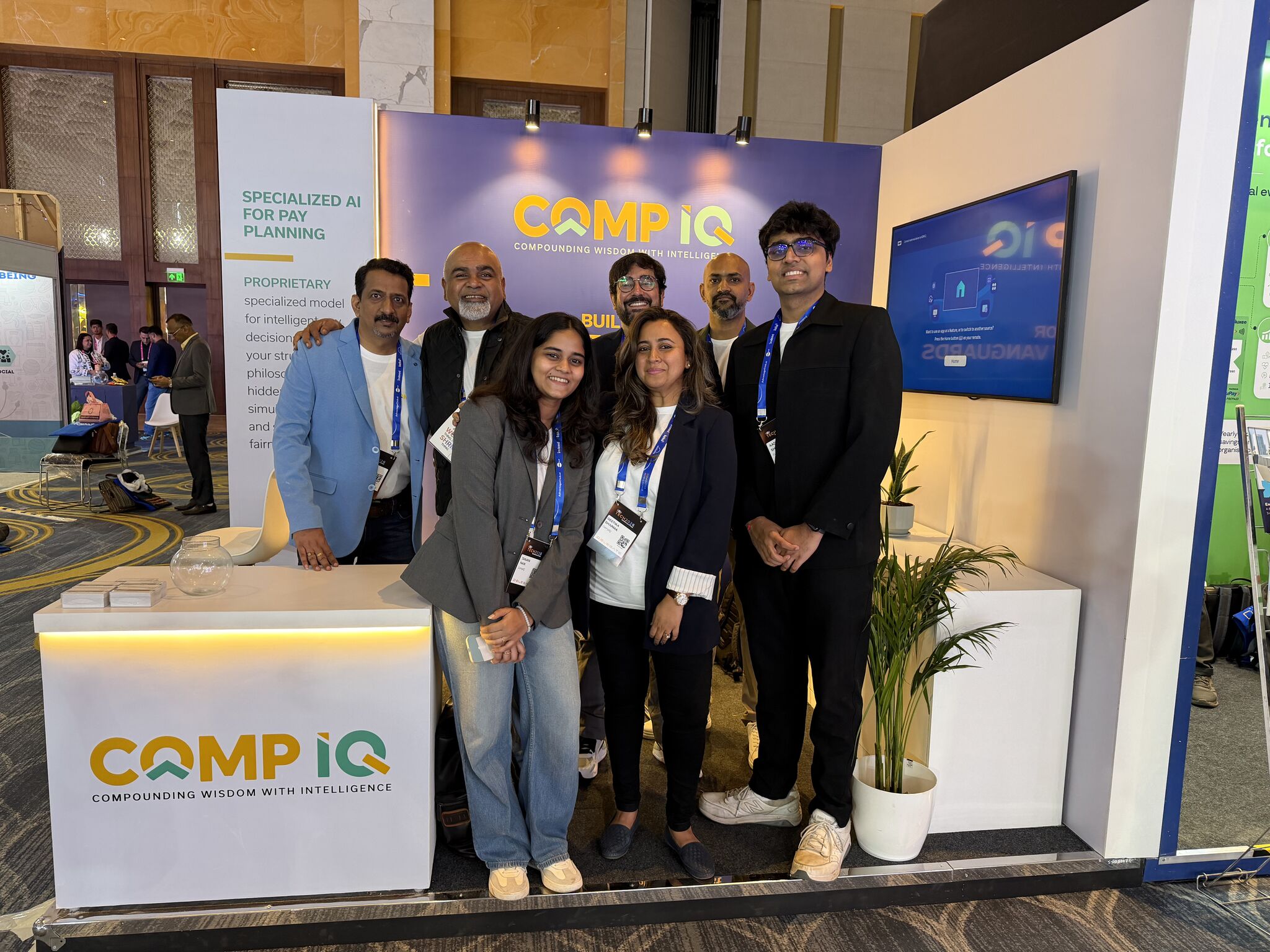
First Expo booth

Compiq is a Mumbai-based startup founded in 2025, developing an AI-powered compensation and pay planning platform. The platform itself is an used AI to simplify compensation management, support pay planning, and enable smarter decision-making across organizations.

Project Brief

Project Brief

This project is a system designed to support managers in making smarter, faster, and more consistent appraisal decisions. It brings together performance data, compensation benchmarks, budget constraints, and organizational guidelines into a single intelligent workspace, where AI actively assists rather than just presenting information.

This project is a system designed to support managers in making smarter, faster, and more consistent appraisal decisions. It brings together performance data, compensation benchmarks, budget constraints, and organizational guidelines into a single intelligent workspace, where AI actively assists rather than just presenting information.

The Challenge

The Challenge

When the path is clear, the choice becomes obvious

When the path is clear, the choice becomes obvious

you can click the buttons :))

you can click the buttons :))

But compensation decisions demand more than just a choice.

Every decision must balance fairness, business goals, budgets, and employee expectations—while remaining transparent and defensible.

Every decision must balance fairness, business goals, budgets, and employee expectations—while remaining transparent and defensible.

In simple words, Total rewards an employee receives for their work

Compensation Flow (Manager focused)

Compensation Flow (Manager focused)

The Manager makes direct compensation recommendations for their team members based on performance, potential, and role criticality. They ensure that rewards reflect individual contributions while adhering to guidelines and budgets. Managers play a key role in communicating compensation decisions transparently and maintaining team motivation and trust.

Research

Literature Review

Built foundational understanding of compensation, appraisal, and decision systems

Competitive Analysis

Identified existing solutions and gaps in current HR tools

Market Positioning & Ecosystem

Mapped the broader HR-tech landscape and where the solution fits

Real-World Organizational Applications of AI in HR & Compensation

Identified existing solutions and gaps in current HR tools

Benchmark Research

Understood best practices and standards across leading platforms

User Research

Revealed real user needs, pain points, and decision-making challenges

Literature Review

Evolution of Comp Management Systems

Compensation Equity

Algorithmic Transparency and Trust

Use of AI in HR, Workforce & Compensation

Books that helped build my understanding of the domain before diving into the core product, especially coming in with limited prior knowledge of the field.

Secondary Research Synthesis - Phase 1

Started by understanding compensation at a fundamental level, exploring each element involved in the process.

Primary research - Phase 2

6 semi-structured interviews were carried out with managers at big organizations, focused on current workflow pain points, tool usage, and decision making processes during appraisal cycles. Based on analysis of recurring pain points, the How Might We questions that formed the design brief.

Key Bases for Employee Appraisals
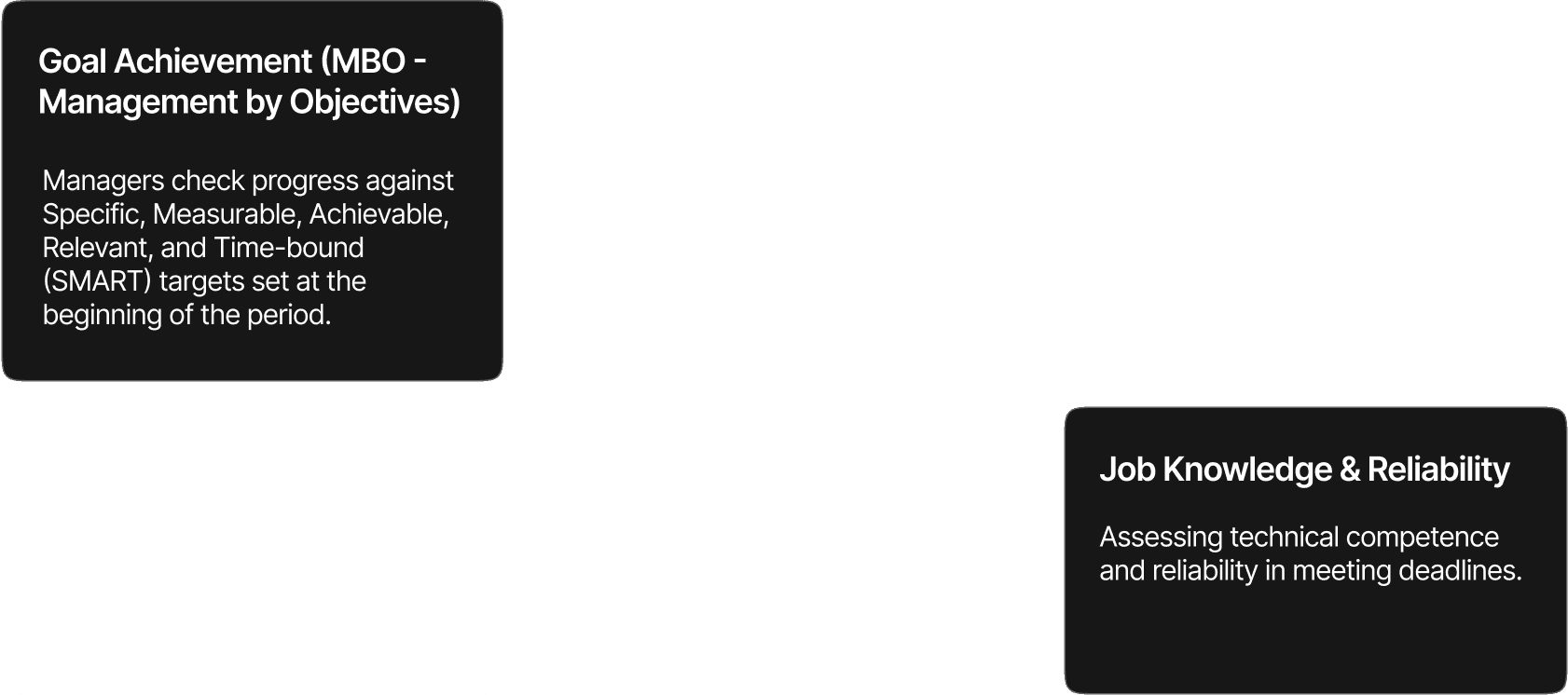
1- Key Challenges identified in Compensation Decisions

1- Key Challenges identified in Compensation Decisions

Today’s compensation review process is fundamentally broken for the people responsible for executing it. Managers juggle spreadsheets & market reports, all manually, all under time pressure. The result is decisions that are slow, inconsistent, and disconnected from the market reality their employees already know

Lack of clear decision guidelines

Unclear performance criteria make it difficult to measure achievements objectively, leaving employees confused about expectations.

Lack of clear decision guidelines

Unclear performance criteria make it difficult to measure achievements objectively, leaving employees confused about expectations.

Forced Distribution Systems (Bell Curve)

"bell curve" method, which forces managers to categorize a set percentage of employees as top, average, or poor performers, has traditionally created unhealthy competition, reduced teamwork, and fostered dissatisfaction.

Enable Data-Driven and Predictive Decisions

Use automation for forecasting and scenario modelling to help stakeholders evaluate pay distribution, budget impact, and fairness outcomes before making decisions.

Enable Data-Driven and Predictive Decisions

"bell curve" method, which forces managers to categorize a set percentage of employees as top, average, or poor performers, has traditionally created unhealthy competition, reduced teamwork, and fostered dissatisfaction.

Too much scattered data

Use multiple sources such as spreadsheets, appraisal platforms, emails, and dashboards to make a single compensation decision. This fragmented flow makes it difficult to access, compare, and interpret information efficiently.

Too much scattered data

Use multiple sources such as spreadsheets, appraisal platforms, emails, and dashboards to make a single compensation decision. This fragmented flow makes it difficult to access, compare, and interpret information efficiently.

Subjectivity and Bias

Personal biases, such as the halo effect (focusing on one positive trait) and recency bias (focusing only on recent performance), frequently influence ratings, leading to unfair assessments.

Subjectivity and Bias

Personal biases, such as the halo effect (focusing on one positive trait) and recency bias (focusing only on recent performance), frequently influence ratings, leading to unfair assessments.

Tools fragmented

Compensation workflows are distributed across disconnected tools with limited integration between systems. As a result, managers manually bridge gaps between platforms, increasing complexity, effort, and chances of inconsistency.

Tools fragmented

Compensation workflows are distributed across disconnected tools with limited integration between systems. As a result, managers manually bridge gaps between platforms, increasing complexity, effort, and chances of inconsistency.

2- Tools Used in a Compensation Workflow

2- Tools Used in a Compensation Workflow

3- Micro Survey

A micro survey was conducted to understand general user perceptions of AI-assisted tools, with a focus on trust, usability, and task efficiency.

64%

are open to Al-recommendations

58%

believe Al can reduce decision time

12%

fully trust Al for high-stakes decisions

78%

prefer Al + human collaboration

Affinity Mapping

Define pain points and opportunities to improve the process

Benchmarking Research

Four factors of the CompIQ compensation recommendation engine were each grounded in quantitative research

[Factor 1]

[Factor 2]

[Factor 3]

[Factor 4]

Factor 01- Macro Factor 

Source

Mercer Cost of Living Index 2025

Income Limit

Age Limit

Citizenship

Other Conditions

What it contained

Must have at least 40% disability certified by a competent medical authority with a UDID card or Enrollment ID

Up to ₹30,000/month: Full subsidy.

₹30,001–₹45,000/month: 50% subsidy.

No specific age limit; available for all eligible persons with disabilities.

Must be an Indian citizen residing within the country.

The applicant should not have received the same type of aid from any government source in the past three years.

Always in motion, making things, breaking things, and talking about things that don’t exist yet.

Play Tic Tac Toe with me

O-0
X-0

© Made with lots of chai & dark circles | Mar 2026

Always in motion, making things, breaking things, and talking about things that don’t exist yet.

Play Tic Tac Toe with me

O-0
X-0

© Made with lots of chai & dark circles | Mar 2026

Create a free website with Framer, the website builder loved by startups, designers and agencies.